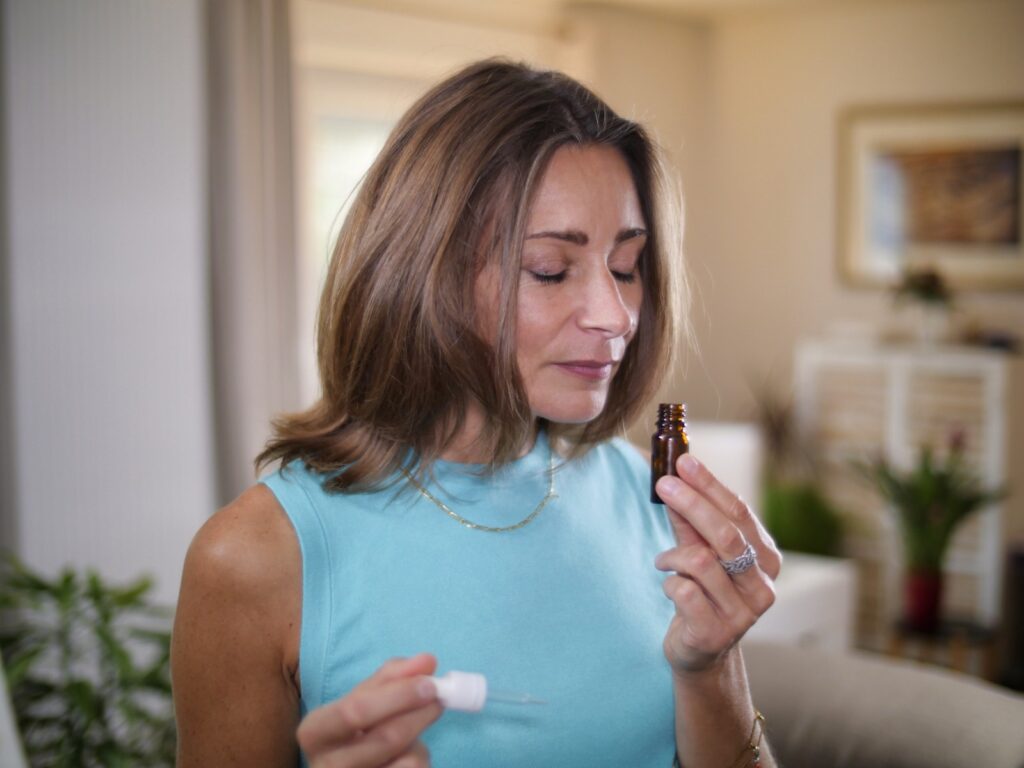
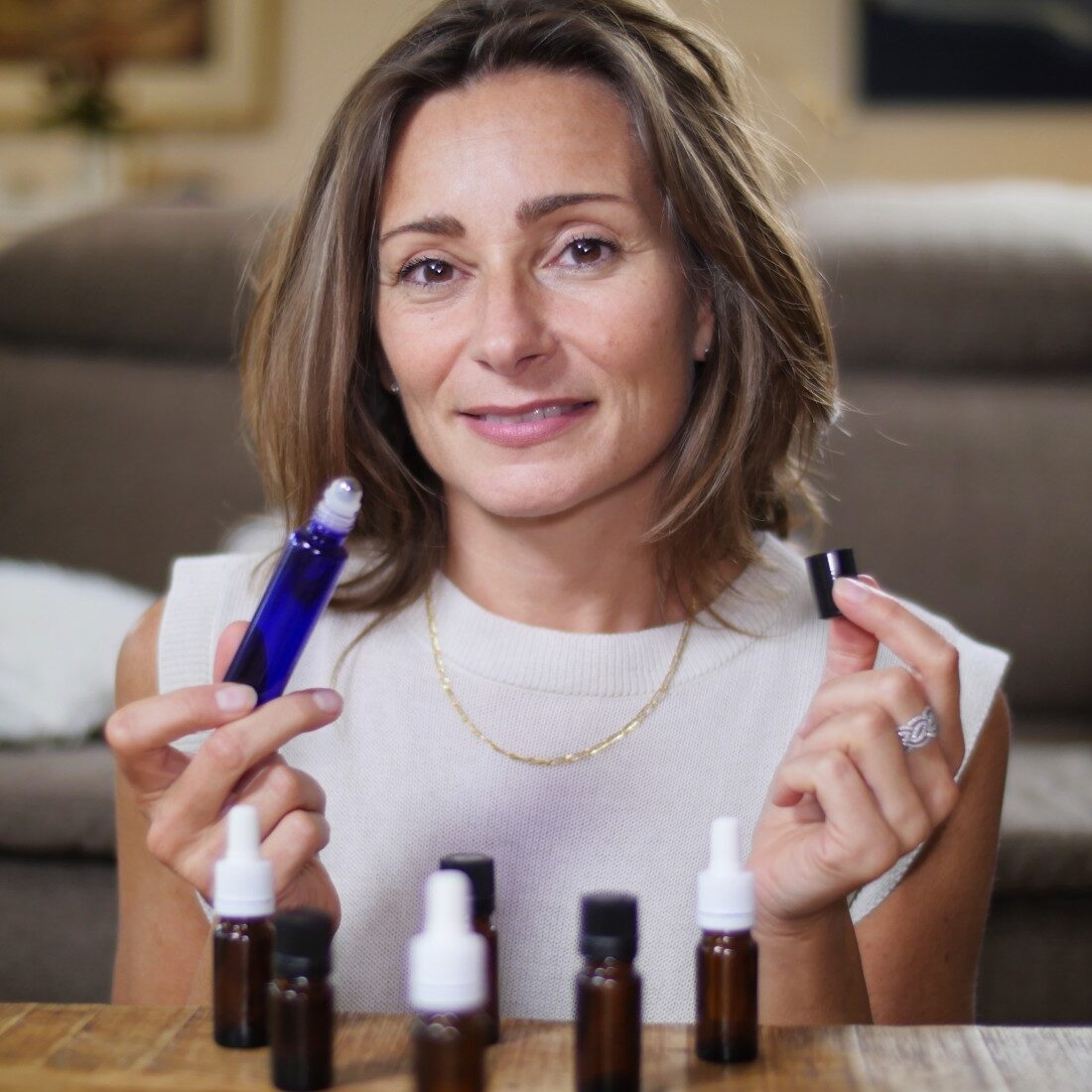
For me, essential oils are part of my everyday life
They do not replace a visit to my doctor or a medical prescription — I am not a physician, and I tend to feel anxious when it comes to health issues. However, for everyday discomforts and my sense of well-being, they are an instinctive, relevant, and remarkably effective support.
Whenever I feel the slightest sense of weakness or slowing down — whether digestive, circulatory, nervous, or emotional — or simply to counter that subtle yet inevitable feeling brought on by rejuvenation, I turn to aromatherapy. Nature offers us an incredible wealth of often overlooked resources.
When I create a synergy for a specific concern, my aim is to make it as relevant as possible by creating a resonance between the person, the plants, and the essential oils themselves. I look for meaningful connections between an individual’s profile or condition and specific characteristics I know from the plants.
For example, between two essential oils with similar biochemical profiles, I will favour an eucalyptus oil over a Melaleuca when the desired focus is respiratory and deep rather than primarily immune-related (such as Eucalyptus globulus rather than Niaouli). In the same way, I may choose an essential oil derived from a flower or flowering top rather than a leaf when a condition has a strong psycho-emotional dimension (for example, fine lavender rather than petitgrain bigarade).
I explain this particular approach and the reasons behind it in more detail in my course “Simple gestures in aromatherapy in daily life or in emergency cases” 100% e.learning
My students not only learn general safety guidelines for handling essential oils, but also how these can be used for a wide variety of ailments to improve well-being and increase quality of life. At the same time, I impart detailed expertise on essential oils and provide participants with a comprehensive, holistic, and integrative understanding of these natural substances and their practical applications.