The digestive system plays a fundamental role in overall health. Its mission is threefold: digest, absorb, and eliminate.
Through digestion, the energy drawn from food is transformed into fuel that every cell in the body can use. The brain, muscles, and organs draw their essential nutrients from the bloodstream and interstitial fluids. These nutrients are the final outcome of a complex digestive alchemy involving multiple organs, glands, and enzymes.
Because the digestive system is a cornerstone of health, even minor dysfunctions can have wide-ranging consequences: altered bowel transit, headaches, bloating, fatigue, mood disturbances, and weakened immune defenses.
Over time, chronic digestive imbalance may contribute to degenerative and autoimmune disorders, metabolic overload conditions such as depression, fibromyalgia, diabetes, or weight gain, as well as “elimination” disorders affecting the body’s detox organs, vor example psoriasis, acne, colitis, or Crohn’s disease.
Aromatic Plants to Support Digestion
For centuries, aromatic herbs have been used in cooking — often intuitively, yet wisely. Their presence in meals helped maintain digestive balance by supporting enzyme secretion and the function of the liver, pancreas, and intestines.
Digestive discomfort often arises from excess fats, sugars, or alcohol that must be metabolized after dietary excess. The liver and pancreas — alongside the stomach — are key digestive organs. Bile and pancreatic juices play a crucial role in fat metabolism and in neutralizing stomach acidity. This neutralization is essential, as digestive enzymes function optimally in an alkaline environment.
After gastric digestion in hydrochloric acid, food passes into the duodenum, where bile from the gallbladder and pancreatic juices are released.
Symptoms such as acid reflux, heartburn, mouth ulcers, or even sleep apnea can be early warning signs of liver or pancreatic weakness — signals that should not be ignored.
Scientific and clinical aromatherapy now offers a wide range of essential oils selected for their targeted digestive actions:
- Cholagogues & choleretics (stimulating bile production and flow)
- Carminatives (reducing gas and bloating)
- Stomachics (supporting overall digestive function)
Essential oils for digestive purposes are generally essential oils that have stimulating properties on the entire digestive tract and all digestive juices. In fact, the liver, pancreas, stomach, and even intestinal motility (the movements of the intestines that allow food to move forward) are supported and gently rebalanced toward their physiological state.
When digestion leads to post-meal fatigue, heaviness, bloating, or a coated mouth, it is helpful to take a couple of drops of certain essential oils sublingually, particularly those included in the recommended formula, with a little linseed or rapeseed oil. Hold them in your mouth for a few moments and swallow 10 minutes before meals. The benefits can be felt after one or two doses: the stomach deflates, the breath becomes fresher and energy returns.
Supporting Intestinal Balance with Essential Oils
Essential oils are naturally bifidogenic and eubiotic: they respect and support the intestinal microbiota rather than disrupting it.
The intestines host more than 400 different bacterial strains, essential for vitamin synthesis, neurotransmitter production (including serotonin), immune defense, and protection against pathogenic organisms.
This explains why, after an oral essential oil protocol, people often feel stronger, fitter and more resilient than before: the intestinal ecosystem has been regenerated and rebalanced.
Even the most antibiotic essential oils demonstrate a remarkable selectivity within the digestive tract, provided that the safety instructions regarding dosage and duration of use are followed. While pathogenic bacteria such as Escherichia coli (in normally sterile environments like urine) are sensitive to essential oils such as oregano or savory, beneficial gut flora remains preserved.
The balance of this intestinal flora is primarily maintained by a balanced diet rich in vegetables,nd diversified between root vegetables (which serve as prebiotics, i.e. food for bacteria), stem vegetables, and leafy vegetables (which are a source of natural probiotics).
With this in mind, a well-balanced aromatic synergy aimed at digestion could include essential oils distilled from rhizomes, such as ginger, others distilled from aerial parts such as stems and leaves (such as peppermint), and still others distilled from seeds such as dill or coriander.
- Rhizome-distilled essentiol oils (e.g. ginger)
- Aerial parts (e.g. peppermint leaves)
- Seeds (e.g. coriander or dill)
Stress, Digestion, and Essential Oils
Beyond enzymes, pH balance, and bacteria, digestion is deeply influenced by the nervous system. The digestive system is highly innervated. The vagus nerve connects the digestive tract to the brain and enables the reflexes of nausea and vomiting when ingesting food that is identified as toxic and needs to be expelled. This dense innervation makes the digestive tract highly sensitive to emotions, stress and upsets. The involvement of stress in digestive/intestinal disorders is well established.
Stress-related digestive disorders such as irritable bowel syndrome, Crohn’s disease, gastric ulcers, or microbiota imbalance, still have an unclear aetiology, but are increasingly linked to multiple emotional, immune, hormonal and nervous causes… these are four dimensions that define an individual's constitution.
To support the digestive system holistically, stress-regulating essential oils can be invaluable:
- EO Roman chamomile (Chamaemelum nobile or Anthemis nobilis) helps modulate stress responses throughout the body: digestive tract, respiratory system, circulatory system, etc.
- EO Tropical basil (Ocimum basilicum) is a powerful antispasmodic that relieves muscular and digestive tension related to stress
Practical tip:
Apply 2 - 3 drops of each oil*, diluted in 3 – 5 drops of apricot kernel oil, and massage the abdomen. Repeat 3 – 6 times daily. Within two to three days, improvements in stress levels, digestion, and intestinal comfort are often noticeable.
*) Depending on where you live, the size of the drops may vary. For my formulas, I use the drop size commonly used in France, which is 1 ml = 30 drops. In some countries, such as Germany, essential oils are usually sold with a bigger drop size of 1 ml = 17 - 20 drops. In this case, you would use less drops (max. 2 drops of each) for this practical tip.
Dill Essential Oil: The “Champagne” of Digestion
With its light, elegant fragrance, dill essential oil (Anethum graveolens) is a major digestive ally. It stimulates both liver and kidney function, supporting the body’s primary detox systems.
Before heavy meals, it is very useful to take take it the day before: 1 - 2 drops* sublingually, diluted in a little linseed oil, in the morning and at lunchtime (avoid evening use due to its stimulating nature).
Dill essential oil stimulates digestive juices in advance, increases peristalsis and optimises all stages of digestion. Also, as a preventive measure (and in cases of digestive discomfort), it supports the emotional sphere during periods of grief, when there is a tendency towards depression.
*) Depending on where you live, the size of the drops may vary (see explication above). If you use essential oils with a bigger drop size, 1 drop EO will be sufficient here.
MY FORMULA
Properties:
Stimulating and digestive tonic, calms spasms and rebalances the autonomic nervous system, anti-inflammatory for the intestines, carminative, cholagogue and choleretic, eupeptic.
Composition (for an 10 ml amber glass dropper bottle):
- Peppermint EO (Mentha x piperita) – 60 drops
- Fresh ginger EO (Zingiber officinale) – 40 drops
- Coriander seed EO (Coriandrum sativum) – 20 drops
- Petitgrain bigarade EO (Citrus aurantium amara leaves) – 40 drops
- Dill EO (Anethum graveolens) – 20 drops
- Lemon zest EO (Citrus limonum) – 20 drops
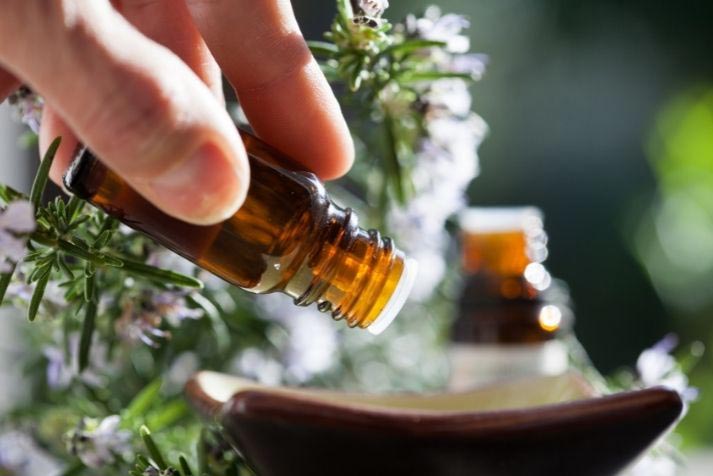
In a 10 ml tinted glass bottle fitted with a dropper, add the recommended number of drops of essential oil. Close the bottle and shake gently.
Directions for use:
Dilute 2 drops of the blend with a small amount of linseed oil. To be taken just before meals, 2–3 times daily.
Duration of use:
Use occasionally or as a 10-day digestive reset.
Indications:
Digestive discomfort, bloating, bad breath, coated mouth, post-meal fatigue, constipation, acid reflux, heartburn, dull complexion.
Contraindications:
Do not use if one of the following applies: Children, people with epilepsy, pregnant or breastfeeding women, gallbladder removal. Use with caution in cases of high blood pressure (monitor regularly!).
Disclaimer
This article is not intended to replace medical diagnosis or prescribed treatment.
Essential oils are complementary tools designed to improve daily comfort and support overall well-being alongside conventional care.
For further reading on constipation, see: Essential Oils for Constipation.
Want to Learn some Simple gestures in emergency cases?
Join my course today, and discorver the practical gestures in aromatherapy thant can be integrated in daily life!
Examples of studies and articles on this topic:
Essential oils and digestive disorders:
Elodie Thony. L’utilisation de l’aromathérapie dans les troubles digestifs (The use of aromatherapy for digestive disorders.) Sciences pharmaceutiques. 2018, HAL Id: hal-03297585 https://hal.univ-lorraine.fr/hal-03297585v1
Arthur Metayer. L’aromathérapie et le traitement du reflux gastro-œsophagien au comptoir. (Aromatherapy and over-the-counter treatment for gastroesophageal reflux disease.) Sciences
du Vivant [q-bio]. 2019. HAL Id: dumas-02892094 https://dumas.ccsd.cnrs.fr/dumas-02892094v1
Camarda L, et al. Targeting the Gut-Brain Axis with Plant-Derived Essential Oils: Phytocannabinoids and Beyond. Nutrients. 2025 May 3;17(9):1578. doi: 10.3390/nu17091578. PMID: 40362887; PMCID: PMC12074236.
Kim YS, et al. (2020) Herbal Therapies in Functional Gastrointestinal Disorders: A Narrative Review and Clinical Implication. Front. Psychiatry 11:601. doi: 10.3389/fpsyt.2020.00601
Gopalsamy RG, et al. Dietary essential oil components: A systematic review of preclinical studies on the management of gastrointestinal diseases. Phytomedicine. 2025 May;140:156630. doi: 10.1016/j.phymed.2025.156630. Epub 2025 Mar 8. PMID: 40085990.
You L, et al. Effects of aromatherapy on fatigue, quality of sleep and quality of life in patients with inflammatory bowel disease: A feasibility study. Complement Ther Clin Pract. 2022 Nov;49:101648. doi: 10.1016/j.ctcp.2022.101648. Epub 2022 Aug 2. PMID: 35994795.
Najmeh Oliyaei et al., Application of Essential Oils in the Treatment of Inflammatory Bowel Disease, Published: 23 June 2022, From the Edited Volume Essential Oils - Advances in Extractions and Biological Applications DOI: 10.5772/intechopen.102966
Phillip Thomas, Therapeutic Role of Ginger Essential Oil in Gastrointestinal Disorders: A Natural Alternative to Conventional Treatments, Date: 5/9/2024
Yousefi M et al. Effects of Dietary Dill Essential Oil on Growth Performance, Digestive Enzymes, Antioxidant/Immunological Parameters and Disease Resistance in Rainbow Trout, Oncorhynchus mykiss. J Anim Physiol Anim Nutr (Berl). 2025 Jul;109(4):983-992. doi: 10.1111/jpn.14112. Epub 2025 Feb 26. PMID: 40012141.
Camarda L, et al. Targeting the Gut-Brain Axis with Plant-Derived Essential Oils: Phytocannabinoids and Beyond. Nutrients. 2025 May 3;17(9):1578. doi: 10.3390/nu17091578. PMID: 40362887; PMCID: PMC12074236.
Dill:
Jana S, Shekhawat GS. Anethum graveolens: An Indian traditional medicinal herb and spice. Pharmacogn Rev. 2010 Jul;4(8):179-84. doi: 10.4103/0973-7847.70915. PMID: 22228959; PMCID: PMC3249919.
Alie Esmail Al-Snaf, THE PHARMACOLOGICAL IMPORTANCE OF ANETHUM GRAVEOLENS. A REVIEW, International Journal of Pharmacy and Pharmaceutical Sciences, ISSN- 0975-1491 Vol 6, Issue 4, 2014, Department of Pharmacology, College of Medicine, Thi qar University, Iraq
Mohammad Taghi Goodarzi et al., Review Article: The Role of Anethum graveolens L. (Dill) in the Management of Diabetes, Hindawi Publishing Corporation, Journal of Tropical Medicine, Volume 2016, Article ID 1098916, 11 pages, http://dx.doi.org/10.1155/2016/1098916
Nam HH, Nan L, Choo BK. Anti-Inflammation and Protective Effects of Anethum graveolens L. (Dill Seeds) on Esophageal Mucosa Damages in Reflux Esophagitis-Induced Rats. Foods. 2021 Oct 18;10(10):2500. doi: 10.3390/foods10102500. PMID: 34681549; PMCID: PMC8535990.
Arsha Saji et al, A review on Anethum graveolens: Its role in human life, The Pharma Innovation Journal 2022; SP-11(7): 332-336, ISSN (E): 2277-7695
Hadi N, Drioiche A, et al. Phytochemical Analysis and Evaluation of Antioxidant and Antimicrobial Properties of Essential Oils and Seed Extracts of Anethum graveolens from Southern Morocco: In Vitro and In Silico Approach for a Natural Alternative to Synthetic Preservatives. Pharmaceuticals (Basel). 2024 Jul 1;17(7):862. doi: 10.3390/ph17070862. PMID: 39065713; PMCID: PMC11280095.
Charles, D. J., Simon, J. E., & Widrlechner, M. P. (1995). Characterization of Essential Oil of Dill (Anethum graveolens L.). Journal of Essential Oil Research, 7(1), 11–20. https://doi.org/10.1080/10412905.1995.9698456
Stress, digestion and essential oils:
Leigh SJ, Uhlig F, et al. The impact of acute and chronic stress on gastrointestinal physiology and function: a microbiota-gut-brain axis perspective. J Physiol. 2023 Oct;601(20):4491-4538. doi: 10.1113/JP281951. Epub 2023 Sep 27. PMID: 37756251.
Santos J, Maran PL, Rodríguez-Urrutia A. Stress, microbiota, and the gut-brain axis in mental and digestive health. Med Clin (Barc). 2025 Mar 28;164(6):295-304. English, Spanish. doi: 10.1016/j.medcli.2024.11.023. Epub 2025 Jan 16. PMID: 39824687.
Lobo B, Tramullas M, et al. The Stressed Gut: Region-specific Immune and Neuroplasticity Changes in Response to Chronic Psychosocial Stress. J Neurogastroenterol Motil. 2023 Jan 30;29(1):72-84. doi: 10.5056/jnm22009. PMID: 36606438; PMCID: PMC9837549.
Saadatmand S, Zohroudi F, Tangestani H. The Effect of Oral Chamomile on Anxiety: A Systematic Review of Clinical Trials. Clin Nutr Res. 2024 Apr 23;13(2):139-147. doi: 10.7762/cnr.2024.13.2.139. PMID: 38784853; PMCID: PMC11109927.
Jia Y, Zou J, et al. Action mechanism of Roman chamomile in the treatment of anxiety disorder based on network pharmacology. J Food Biochem. 2021 Jan;45(1):e13547. doi: 10.1111/jfbc.13547. Epub 2020 Nov 5. PMID: 33152801.
Important information
Whenever we use the term ‘essential oils’ (EO), we always refer to essential oils that are 100% natural, 100% pure, 100% unadulterated, and preferably organic or wildcrafted. Only 100% genuine essential oils, obtained either by distillation or cold expression, are suitable for French aromatherapy. Proper storage and packaging, as well as adherence to the shelf life, are equally important in order to prevent the oxidation of aromatic molecules.
The information provided on this website is not intended as a substitute for professional medical advice, diagnosis, prescription or treatment. Essential oils are excellent complementary tools, but are not a replacement for medication. Aromatherapy is not recommended without medical advice for anyone in a fragile state (children, pregnant and breastfeeding women, people with allergies, asthma or epilepsy), or for anyone taking medication.
French aromatherapy requires strict compliance with contraindications, dosages and duration of use, and requires the use of essential oils of the best quality that meet standard criteria (method of cultivation, extraction, packaging, analysis and traceability). It is important to strictly adhere to the botanical and biochemical identifaction of the essential oils mentionned.
Individual tolerance to essential oils varies significantly, and it is important that each individual respects their own tolerance. For people with a low tolerance threshold, it is advisable to further dilute the essential oils listed in this recipe and the proposed synergies. Long-term use of essential oils requires medical advice.