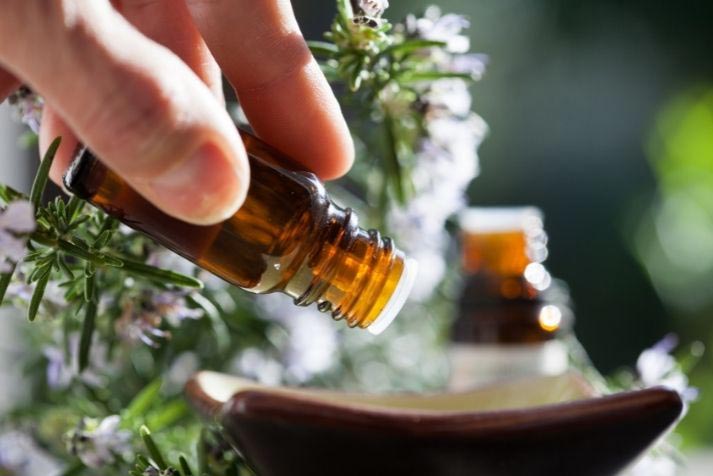
Rapid Relief with Hydrosols and Essential Oils
When used correctly, essential oils taken orally, alongside olfaction and hydrosols, can provide effective support for seasonal allergies, both in prevention and acute flare-ups. As detailed in the article “Pollens, Allergens and Seasonal Allergies: Prevention and Care with Essential Oils”, aromatherapy offers valuable tools during periods of respiratory and ocular discomfort caused by airborne pollen.
Pollen: The Root Cause of Seasonal Allergic Rhinitis (“Hay Fever”)
In spring, the main allergens responsible for allergic rhinitis and conjunctivitis—commonly known as hay fever—are tree and herbaceous pollens.
Pollen is a microscopic particle, produced by the stamens (male reproductive organs of flowers) to fertilize the pistils (female organs), allowing fruit development.
For pollen to be allergenic, three conditions must be met:
- It must be wind-borne, not insect-pollinated
- It must be small enough to remain airborne and reach the nasal, ocular, or bronchial mucosa
- It must carry specific surface proteins capable of triggering an immune response
This allergenic potential can be amplified by air pollution, which alters pollen structure (making it more aggressive) and increases mucosal sensitivity.
Pollination Calendar (Indicative)
Trees with moderate to high allergenic potential
Alder, birch, hornbeam, oak, cypress, ash, olive, plane tree
→ Pollination period: February to July
→ Peak: April to June
Herbaceous plants with high allergenic potential
Ragweed, mugwort, grasses, pellitory
→ Pollination period: May to September/October
→ Peak: May–June
Allergic symptoms vary depending on:
- Individual sensitization
- Geographic location
- Local vegetation
Rainfall often reduces symptoms by lowering airborne pollen levels.
Regional pollen calendars are widely available online, particularly via the RNSA (French National Aerobiological Surveillance Network), which also offers a mobile app and alert system.
Seasonal Allergies & Essential Oils by Olfaction
Essential oils such as Tarragon, Roman Chamomile, German Chamomile, and Katrafay—known for their anti-allergic, anti-inflammatory, and calming properties—can be combined with respiratory decongestant and antiseptic oils for enhanced relief.
Olfactory Inhalers & Diffusion
For Allergic Rhinitis Relief
Portable Inhaler – Anti-Allergic & Soothing Formula
- Katrafay (Cedrelopsis grevei) – 10 drops
- Roman Chamomile (Chamaemelum nobile) – 5 drops
- Fine Lavender (Lavandula angustifolia) – 5 drops
Decongestant & Antispasmodic Formula
- Eucalyptus Radiata (Eucalyptus radiata) – 10 drops
- Peppermint (Mentha piperita) – 3 drops
- Siberian Fir (Abies sibirica) – 7 drops
How to prepare:
Add the essential oils to a blank inhaler wick. Insert the wick, close the inhaler, and it’s ready to use.
Contraindications:
Pregnant or breastfeeding women, children, elderly individuals, people with asthma or epilepsy.
Want to Learn some Simple gestures in emergency cases?
Join my course today, and discorver the practical gestures in aromatherapy thant can be integrated in daily life!
Atmospheric Diffusion at Home
Respiratory Comfort, Air Purification & Relaxation
Formula 1
- Katrafay – 10 drops
- Sweet Orange zest (Citrus sinensis) – 40 drops
- Patagonian Pine (Pinus ponderosa) – 10 drops
Formula 2 – Anti-Inflammatory & Decongestant
- Katrafay – 10 drops
- Eucalyptus Radiata – 15 drops
- Lemon zest (Citrus limonum) – 35 drops
Use:
Diffuse the chosen blend for 10 minutes, 3–4 times per day, according to comfort.
Contraindications:
Pregnant or breastfeeding women, children, elderly individuals, people with asthma or epilepsy.
⚠️ Essential oil use involves many precautions, especially for fragile individuals. Refer to Aude Maillard’s article “Mastering the Safe Use of Essential Oils” for detailed guidance.
Seasonal Allergies & Hydrosols
Hydrosols (also called floral waters) are by-products of essential oil distillation. They contain aromatic molecules in very low concentrations, making them gentler and safer, with fewer contraindications.
Allergic Rhinitis: Preventive Hydrosol Formula
MY FORMULA
Indication: Prevention of seasonal allergies
- Sweet Basil hydrosol (Ocimum basilicum CT linalool) – 1.5 tsp
- German Chamomile hydrosol (Matricaria recutita) – 1.5 tsp
- Mineral water – 1 liter
Properties:
Sweet Basil hydrosol is antihistamine, digestive, and mentally calming.
German Chamomile hydrosol is anti-allergic, soothing, and sleep-promoting.
How to use:
Mix into 1 liter of water and drink throughout the day.
Repeat daily for 2–3 weeks before allergy season.
Allergic Conjunctivitis: Eye Care with Hydrosols
MY EYE CARE PROTOCOL
- Cornflower hydrosol – antiseptic & decongestant
- German Chamomile hydrosol – anti-allergic & soothing
- Roman Chamomile hydrosol – anti-inflammatory & calming
Use:
With eyes closed, spray gently 2–3 times daily, or soak sterile compresses and apply for a few minutes.
Note:
Cornflower hydrosol is for external use only.
German and Roman Chamomile hydrosols may be taken orally.