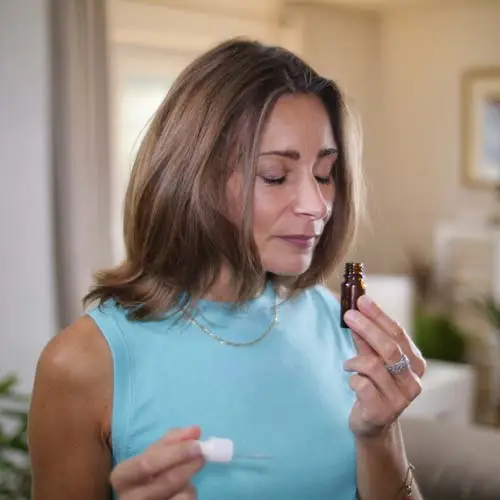
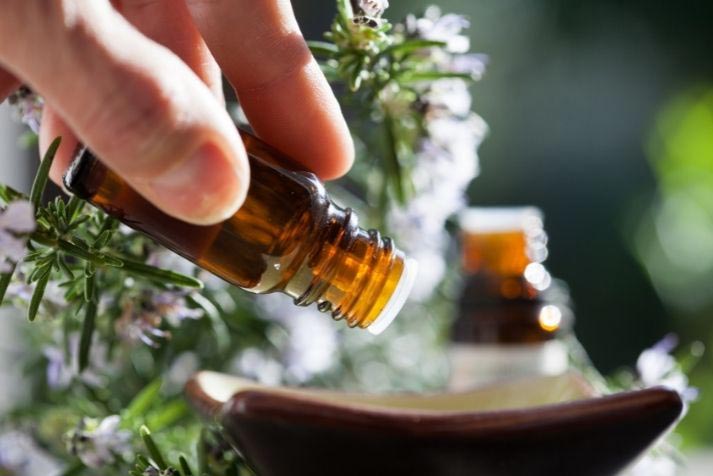
Seasonal allergy flare-ups can be eased effectively with hydrolats (hydrosols) and essential oils, whether used preventively or during an acute allergic episode. As discussed in the article “Pollens, Allergens, and Seasonal Allergies: Prevention and Relief with Essential Oils”, essential oils used by olfaction and hydrolats offer valuable support during periods of respiratory and/or ocular discomfort caused by pollen exposure.
Pollen: The Trigger Behind Allergic Rhinitis (“Hay Fever”)
In springtime, the allergens most commonly responsible for allergic rhinitis and conjunctivitis — often referred to as hay fever — are tree and herbaceous pollens.
Pollen is a microscopic particle produced by the stamens (male organs) of flowers to fertilize the pistil (female organ), enabling fruit formation.
For pollen to be allergenic, three conditions must be met:
- It must be wind-dispersed, not insect-pollinated
- It must be small enough to remain airborne and come into direct contact with nasal, ocular, and/or bronchial mucosa
- It must carry specific surface proteins capable of triggering an immune response
Atmospheric pollution can exacerbate allergic reactions by altering pollen structure — making it more allergenic — and by increasing mucosal immune sensitivity.
Pollination Calendar (indicative)
Depending on the country you live in
Trees with moderate to high allergenic potential:
Alder, birch, hornbeam, oak, cypress, ash, olive tree, plane tree
Pollination period: February to July – peak from April to June
Herbaceous plants with high allergenic potential:
Ragweed, mugwort, grasses, pellitory
Pollination period: May to September/October – peak in May/June
Allergic symptoms vary depending on the plant species involved, geographical location, and individual sensitivity. Rainfall often temporarily improves symptoms.
Regional pollen calendars are freely available online, notably via the RNSA (French National Aerobiological Monitoring Network), which also offers a mobile app and alert system.
Seasonal Allergies & Essential Oils by Olfaction
Essential oils such as tarragon, Roman chamomile, German chamomile, and katrafay — known for their anti-allergic, anti-inflammatory, and calming properties — can be combined with essential oils that decongest and disinfect the respiratory tract.
Aroma Inhaler (Nasal Stick) for Antihistamine / Decongestant Support
Inhaler sticks (also called nasal sticks) can easily be carried in a handbag or jacket pocket.
Anti-allergic, anti-inflammatory & calming blend
- EO Katrafay (Cedrelopsis grevei) – 10 drops*
- EO Roman chamomile (Chamaemelum nobile, also called Anthemis nobilis) – 5 drops*
- EO True lavender (Lavandula angustifolia) – 5 drops*
Decongestant & antispasmodic blend
- EO Eucalyptus radiata – 10 drops*
- EO Peppermint (Mentha piperita) – 3 drops*
- EO Siberian fir (Abies sibirica) – 7 drops*
*) Unfortunately, there is no international standard for the size of drops of essential oils. Depending on where you live, the size of the drops may vary. For my formulas, I use the drop size commonly used in France, which is 1 ml = 30 drops. In some countries, such as Germany, essential oils are usually sold with a bigger drop size of 1 ml = 17 - 20 drops. In this case, you would need to use fewer drops for an inhaler stick. (In total, you would use for the above formulars no more than 0,65 ml essential oils).
How to prepare:
Soak the cotton wick of an inhaler stick with the selected blend. Insert into the inhaler and close. Ready to use: Hold the stick a little way from your nose and inhale the scent mindfully with a few breaths. Close the cap. Repeat as needed.
Contraindications:
Pregnancy, breastfeeding, children, elderly individuals, epilepsy, asthma.
Atmospheric Diffusion at Home
Blend 1
Respiratory Comfort, Air Purification, Relaxation
- EO Katrafay (Cedrelopsis grevei) – 10 drops
- EO Sweet orange zest (Citrus sinensis) – 40 drops
- EO Patagonian pine (Pinus ponderosa) – 10 drops
Blend 2
Anti-inflammatory, Decongestant, Antiseptic
- EO Katrafay (Cedrelopsis grevei) – 10 drops
- EO Eucalyptus radiata – 15 drops
- EO Lemon zest (Citrus limonum) – 35 drops
Use:
Mix the essential oils in a small 5 ml bottle (preferably with a dropper). Pour 15 to 30 drops of your chosen blend into the water reservoir of your ultrasonic diffuser, or 1 to 2 ml into your nebuliser (= device without water). Diffuse for 10 minutes, 3 to 4 times a day, depending on how you feel.
Contraindications:
Pregnancy, breastfeeding, children, elderly individuals, epilepsy, asthma.
⚠️ Essential oil use involves many precautions, especially for vulnerable populations. Refer to Aude Maillard’s article “Understanding the Toxicity of Essential Oils” for full safety guidance.
Seasonal Allergies & Hydrosols (Hydrolats)
Hydrosols (or hydrolats) are aromatic waters obtained during essential oil distillation. They also contain aromatic molecules, but in much lower concentrations. They do not share the same contraindications as essential oils and are a gentle, effective alternative.
Allergic Rhinitis: Preventive Hydrosol Formula
MY FORMULA – Seasonal Allergy Prevention
- HA Sweet basil hydrosol (Ocimum basilicum CT linalool) – 1½ teaspoons
- HA German chamomile hydrosol (Matricaria recutita or matricaria chamomilla) – 1½ teaspoons
- Still mineral water – 1 liter
Properties:
Sweet basil hydrosol has antihistamine properties, aids digestion and calms the mind in cases of nervous fatigue. German chamomile hydrosol has anti-allergenic properties and is known to facilitate recovery and sleep.
How to use:
Mix hydrolats into the water bottle. Drink throughout the day. Repeat daily for 2 to 3 weeks prior to the allergy season.
Allergic Conjunctivitis: Eye Care with Hydrosols
MY EYE CARE PROTOCOL
- HA Cornflower hydrosol (Centaurea cyanus) – antiseptic, decongestant
- HA German chamomile hydrosol (Matricaria recutita or matricaria chamomilla) – anti-allergic, calming
- HA Roman chamomile hydrosol (Chamaemelum nobile, also called Anthemis nobilis) – anti-inflammatory, soothing
How to use:
With your eyes closed, spray a fine mist of your chosen hydrosol (or a blend of two hydrosols, such as cornflower and Roman chamomile or German chamomile) onto your eyelids two to three times a day, or soak two sterile compresses in the hydrosol and leave them on for a few moments.
⚠️ Note: Cornflower hydrolat is for external use only and should not be ingested, unlike chamomile hydrolats.
Examples of studies and scientific articles on this topic
Almeida HHS, et al. Unlocking the Potential of Hydrosols: Transforming Essential Oil Byproducts into Valuable Resources. Molecules. 2024 Sep 30;29(19):4660. doi: 10.3390/molecules29194660. PMID: 39407589; PMCID: PMC11477756.
Want to Learn some Simple gestures in emergency cases?
Join my course today, and discorver the practical gestures in aromatherapy thant can be integrated in daily life!
Mitoshi M, et al. Suppression of allergic and inflammatory responses by essential oils derived from herbal plants and citrus fruits. Int J Mol Med. 2014 Jun;33(6):1643-51. doi: 10.3892/ijmm.2014.1720. Epub 2014 Mar 31. PMID: 24682420.
Léna Amaïa Labussière. Prise en charge à l’officine des allergies saisonnières aux pollens et aux
graminées en Nouvelle Aquitaine. Sciences pharmaceutiques. 2025. HAL Id: dumas-05240332
https://dumas.ccsd.cnrs.fr/dumas-05240332v1
Mimouni, Zaïneb, La place de l'aromathérapie dans le traitement de la rhinite allergique (The place of aromatherapy in the treatment of allergic rhinitis), (2023-06-30) / Universite de Rennes
Choi SY, Park K. Effect of Inhalation of Aromatherapy Oil on Patients with Perennial Allergic Rhinitis: A Randomized Controlled Trial. Evid Based Complement Alternat Med. 2016;2016:7896081. doi: 10.1155/2016/7896081. Epub 2016 Mar 13.
Karolina Jakubczyk et al, Plant hydrolates – Antioxidant properties, chemical composition and potential applications, Biomedicine & Pharmacotherapy, Vol 142, 2021, 112033, doi.org/10.1016/j.biopha.2021.112033
Choi SY, Park K. Effect of Inhalation of Aromatherapy Oil on Patients with Perennial Allergic Rhinitis: A Randomized Controlled Trial. Evid Based Complement Alternat Med. 2016;2016:7896081. doi: 10.1155/2016/7896081. Epub 2016 Mar 13. Erratum in: Evid Based Complement Alternat Med. 2016;2016:2103616. doi: 10.1155/2016/2103616. PMID: 27034695; PMCID: PMC4808543.
Su Jin Won et al., The Effects of Aroma Therapy on Allergic Symptoms, Eosinophil, and the Quality of Life related to Rhinitis in University Students with Allergic Rhinitis, August 2015, Korean Journal of Adult Nursing 27(4):438-448, DOI:10.7475/kjan.2015.27.4.438
Chamomiles (German and / or Roman):
Wu, Y. ni, Xu, Y., & Yao, L. (2011). Anti-inflammatory and Anti-allergic Effects of German Chamomile (Matricaria chamomilla L.). Journal of Essential Oil Bearing Plants, 14(5), 549–558. https://doi.org/10.1080/0972060X.2011.10643972
Sah A, Naseef PP, Kuruniyan MS, Jain GK, Zakir F, Aggarwal G. A Comprehensive Study of Therapeutic Applications of Chamomile. Pharmaceuticals. 2022; 15(10):1284. https://doi.org/10.3390/ph15101284
Lee SH, Heo Y, Kim YC. Effect of German chamomile oil application on alleviating atopic dermatitis-like immune alterations in mice. J Vet Sci. 2010 Mar;11(1):35-41. doi: 10.4142/jvs.2010.11.1.35. PMID: 20195063; PMCID: PMC2833428.
Chandrashekhar VM, et al. Anti-allergic activity of German chamomile (Matricaria recutita L.) in mast cell mediated allergy model. J Ethnopharmacol. 2011 Sep 1;137(1):336-40. doi: 10.1016/j.jep.2011.05.029. Epub 2011 May 31. PMID: 21651969.
Katrafay:
Thanyani Emelton Ramadwa et al., Exploring the therapeutic potential of Cedrelopsis grevei Baill. (Rutaceae): A comprehensive review on the traditional uses, phytochemistry, pharmacological properties and essential oils, South African Journal of Botany, Vol., 175, December 2024, Pages 76-89, doi.org/10.1016/j.sajb.2024.10.007
Eucalyptus:
Nakamura, T., Yoshida, N., Yamanoi, Y. et al. Eucalyptus oil reduces allergic reactions and suppresses mast cell degranulation by downregulating IgE-FcεRI signalling. Sci Rep 10, 20940 (2020). https://doi.org/10.1038/s41598-020-77039-5
Cosima C. Hoch et al., 1,8-cineole (eucalyptol): A versatile phytochemical with therapeutic applications across multiple diseases, Biomedicine & Pharmacotherapy, Vol. 167, Nov 2023, 115467, doi.org/10.1016/j.biopha.2023.115467
Leherbauer, Ingrid and Stappen, Iris. "Selected essential oils and their mechanisms for therapeutic use against public health disorders. An overview. Zeitschrift für Naturforschung C, vol. 75, no. 7-8, 2020, pp. 205-223. doi.org/10.1515/znc-2020-0007
Peppermint:
Park N, Chung JY, Kim MH and Yang WM (2022) Protective effects of inhalation of essential oils from Mentha piperita leaf on tight junctions and inflammation in allergic rhinitis. Front. Allergy 3:1012183. doi: 10.3389/falgy.2022.1012183
Basil:
G Sridevi, et al. Pharmacological basis for antianaphylactic, antihistaminic and mast cell stabilization activity of ocimum sanctum, January 2009, The Internet Journal of Pharmacology 7(1).
Important information
Abbreviations:
- EO = Essential oil
- VO = Vegetable oil
- HA = Hydrosol (Hydrolat)
Whenever we use the term ‘essential oils’ (EO), we always refer to essential oils that are 100% natural, 100% pure, 100% unadultary, and preferably organic or wildcrafted. Only 100% genuine essential oils, obtained either by distillation or cold expression, are suitable for French aromatherapy. Proper storage and packaging, as well as adherence to the shelf life, are equally important in order to prevent the oxidation of aromatic molecules.
The information provided on this website is not intended as a substitute for professional medical advice, diagnosis, prescription or treatment. Essential oils are excellent complementary tools, but are not a replacement for medication. Aromatherapy is not recommended without medical advice for anyone in a fragile state (children, pregnant and breastfeeding women, people with allergies, asthma or epilepsy), or for anyone taking medication.
French aromatherapy requires strict compliance with contraindications, dosages and duration of use, and requires the use of essential oils of the best quality that meet standard criteria (method of cultivation, extraction, packaging, analysis and traceability). It is important to strictly adhere to the botanical and biochemical identifaction of the essential oils mentionned.
Individual tolerance to essential oils varies significantly, and it is important that each individual respects their own tolerance. For people with a low tolerance threshold, it is advisable to further dilute the essential oils listed in this recipe and the proposed synergies. Long-term use of essential oils requires medical advice.
The translation of the articles and videos provided on this web page was done using AI. To ensure that the content and recipes are translated accurately, we have carefully reviewed all articles and texts manually. As we are not native English speakers, the linguistic formulation used may not always be perfect. Regarding the videos: If you notice any discrepancies in the AI translation of our videos, please let us know so that we can correct them.