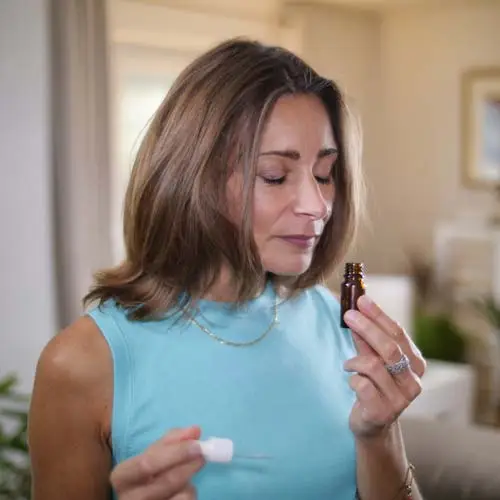
The world of aromatic molecules and essential oils is particularly well suited to stress management, nervous system balance, and psycho-emotional well-being. On a daily basis, it can be surprisingly simple to release nervous tension or anxiety with a few deep breaths of your favorite essential oil — or a blend that resonates with you.
The growing use of clinical aromatherapy and supportive care practices is largely based on this effectiveness and accessibility. But which essential oils are the most calming or sedative for the nervous system? Is one truly better than the others? Do they have precautions or contraindications?
Below is a selection of essential oils that have shown excellent results in supporting relaxation and easing stress or anxiety, along with some important considerations to keep in mind.
The advice provided in this article is not intended to replace a medical diagnosis or prescription. Essential oils are excellent complementary tools, but they should not replace medical treatment.
In matters of stress and anxiety, some individuals may experience psychological distress that requires medical consultation and treatment. Aromatherapy is not recommended without medical advice for vulnerable individuals (children, pregnant or breastfeeding women, people with allergies, asthma, or epilepsy), or for those taking medication.
“It is by remembering that an essential oil always has multiple properties that one becomes the best aromatherapist.”
— Dr. Aude Maillard
Each essential oil contains a complex aromatic “totum”, sometimes made up of more than a thousand different molecules. This biochemical richness gives each oil a unique therapeutic identity.
In France, aromatherapy often uses an analytical biochemical approach, focusing on the dominant molecules of an oil to explain its properties and anticipate potential risks. This method is pragmatic and useful — but ultimately incomplete.
The Key Anti-Stress Molecules
The power of plant aromatic extracts lies in the overall balance of their molecular composition, known as the totum. Minor molecules surrounding the dominant ones play an essential role in shaping the oil’s therapeutic and toxicological profile.
When inhalation is the preferred method of use—as is often the case for stress management—this molecular signature largely determines the psychoactive, emotional, and neurological effects of the oil.
Aromatherapists often focus on molecules known to support the parasympathetic nervous system, stimulate the vagus nerve, and help regulate neurovegetative balance.
Esters
Examples include linalyl acetate (found in true lavender and petitgrain bigarade), isobutyl angelate (Roman chamomile), and benzyl benzoate (ylang-ylang).
Esters are known for their soothing and relaxing effects on the nervous system.
Sesquiterpenes
These molecules, abundant in ylang-ylang complete, often have calming and anti-inflammatory effects. Oils rich in sesquiterpenes include ylang-ylang, clary sage, kunzea, and ginger. Even trace molecules such as germacrene may contribute to mood-lifting effects.
Linalool
This monoterpenol is widely valued for nervous system balance. It can help reduce physical and mental fatigue linked to stress while gently revitalizing the body.
It is found in oils such as:
- ho wood
- lavender
- petitgrain bigarade
- coriander seed
- thyme ct. linalool
- clary sage
- neroli
Terpinen-4-ol
This molecule is dominant in sweet marjoram (Origanum majorana) and contributes to the oil’s notable calming and anxiolytic effects. It is particularly interesting for individuals experiencing bruxism or tension-related stress.
1,8-Cineole
Best known for immune and respiratory benefits, this molecule also provides neuro-vegetative and cognitive support. Oils containing it — such as ravintsara — may help address mental fatigue and cognitive exhaustion.
Menthol
Menthol, the dominant compound in peppermint essential oil, has been studied for its potential effects on anxiety regulation, attention, and mental fatigue. Inhalation may help increase mental clarity and alertness.
Dry inhalation from an inhaler stick or tissue is generally well tolerated if respiratory sensitivity is not an issue.
A Key Tip for Effectiveness
When using aromatherapy for stress relief, personal appreciation of the scent is essential.
The most effective method for rapid nervous system impact is olfactory inhalation, where the essential oil is inhaled deeply for 2–5 minutes. The olfactory nerve sends signals directly to the brain, triggering both pharmacological and emotional responses.
If the scent is unpleasant to the person inhaling it, the resulting emotional discomfort may counteract or weaken the desired effect.
For this reason:
A good anti-stress aromatherapy recommendation is always personalized. It should be based on essential oils that the person enjoys — or at least tolerates well — among those known to support relaxation.
Top 7 Essential Oils for Stress Relief
1. Roman Chamomile
Chamaemelum nobile or Anthemis nobilis
Roman chamomile is particularly known for its anti-inflammatory and sedative properties.
Key properties:
- Nervous system calming, mood-supporting
- Antispasmodic and pain-relieving
- Anti-inflammatory for the skin
- Soothing for itching and allergies
- Digestive support (internally under professional guidance)
Its aroma is fresh and airy. Inhalation often brings a sensation of mental clarity and emotional release, as if negative emotions were gently reset.
It is particularly helpful for individuals who experience emotional reactivity, anxiety about the future, or heightened sensitivity.
Roman chamomile blends well with citrus oils or deeper aromas such as ylang-ylang, angelica, neroli, or marjoram.
At typical doses it has no major intrinsic risks, apart from possible allergy. Medical advice is recommended for individuals taking anxiolytics or antidepressants, during pregnancy or breastfeeding, or for children under seven.
2. True Lavender
Lavandula angustifolia
Perhaps the most famous and versatile essential oil.
Properties:
- Stress-relieving and supportive for blood pressure regulation
- Supports concentration during the day and sleep onset at night
- Neuromuscular relaxant
- Skin-healing and antiseptic
- Anti-inflammatory and pain-relieving
- Emotionally comforting and reassuring
Lavender thrives in extreme conditions — wind, altitude, cold, and drought — yet remains calm and balanced. Its aroma evokes safety, protection, and emotional comfort.
It is particularly useful for individuals prone to rumination, anxiety, loneliness, or emotional vulnerability.
Lavender blends beautifully with frankincense, petitgrain, cypress, marjoram, and ylang-ylang.
3. Petitgrain Bigarade
Citrus aurantium var. amara (leaf and twig)
Petitgrain essential oil combines the aromatic memory of wood, leaf, flower, and fruit.
It is often used to support:
- emotional harmony in relationships
- indecision or mood fluctuations
- insomnia related to loneliness or emotional unrest
Properties:
- Nervous system calming
- Mood-supporting
- Muscle relaxation
- Skin regeneration
- Anti-inflammatory
- Antibacterial and antifungal support
It is particularly helpful when stress manifests physically as muscular tension in the back, neck, or joints.
4. Ravintsara
Cinnamomum camphora ct. 1,8-cineole
Ravintsara conveys a sense of quiet strength and inner balance.
It gently oxygenates the body and mind, helping clear thoughts and restore clarity. Many people find it supportive for mental fatigue, overthinking, and difficulty falling asleep.
Want to Learn some Simple gestures in emergency cases?
Join my course today, and discorver the practical gestures in aromatherapy thant can be integrated in daily life!
Properties:
- Immune-supportive and anti-infectious
- Respiratory decongestant
- Expectorant
- Anti-fatigue
- Emotional balancing
Ravintsara may be particularly useful for individuals who tend to overanalyze, doubt themselves, or experience persistent mental activity.
5. Sweet Marjoram
Origanum majorana
Sweet marjoram embodies warmth and light. Its aroma is comforting yet uplifting.
It is particularly useful for:
- pessimism
- stress-related exhaustion
- self-doubt
- bruxism and tension
Properties:
- Nervous system calming
- Stress-related blood pressure support
- Antifungal and antibacterial
- Antispasmodic
- Anti-inflammatory
- Digestive support
6. Peppermint
Mentha × piperita
Peppermint essential oil is unique. Its cooling aroma brings a sense of mental reset and clarity.
It may help when:
- concentration is difficult
- mental fatigue accumulates
- headaches are stress-related
- impatience or irritability arise
Properties:
- Digestive tonic
- Liver support
- Pain-relieving cooling effect
- Antiviral support
- Anti-inflammatory
- Respiratory decongestant
Peppermint must be used with caution and has several contraindications, including pregnancy, breastfeeding, young children, asthma, epilepsy, and certain gallbladder conditions.
7. Ylang-Ylang Complete
Cananga odorata
Ylang-ylang is sensual and deeply relaxing. Its rich floral aroma can help reconnect individuals with pleasure, presence, and emotional openness.
Properties:
- Powerful sedative and mood-supporting effects
- Blood pressure-lowering support
- Anti-inflammatory
- Digestive tonic
- Endocrine balancing
- Skin and hair support
It is particularly useful for people who struggle to disconnect from work or responsibilities and reconnect with their bodies.
A Bonus Essential Oil: Neroli
Neroli essential oil (orange blossom) is often considered one of the most precious and powerful oils for nervous system regulation.
It may help in situations of:
- emotional exhaustion
- anxiety-related depression
- grief
- long-term emotional wounds
Properties:
- Supports sleep
- Nervous system calming
- Anxiety-relieving
- Broad antimicrobial properties
- Skin-rejuvenating
Creating a Personalized Anti-Stress Blend
Once you identify the oils you appreciate most, you can create a personalized blend.
Select one to three essential oils and mix them in a 10 ml dark glass bottle with dropper. Let your nose guide you when deciding proportions.
The blend can be used undiluted for inhalation, on a tissue or inhaler stick (nasal stick) — very practical during busy workdays.
How to use
Inhale deeply for at least 5 minutes, twice daily if possible.
Use these moments to practice slow breathing or heart-coherence techniques while focusing on positive thoughts.
Example Blends
Blend 1
- Sweet marjoram – 5 ml
- Petitgrain bigarade – 4 ml
- Peppermint – 1 ml
Supports breathing relaxation and may help calm heart rhythm and stress.
Blend 2
- Roman chamomile – 2 ml
- Sweet marjoram – 8 ml
A balanced blend combining a “cool” and a “warm” oil.
Blend 3
- Ravintsara – 3 ml
- True lavender – 3 ml
- Sweet marjoram – 4 ml
Helpful for exhaustion, sadness, and mental overload.
Blend 4
- Neroli – 2 ml
- Roman chamomile – 8 ml
A powerful blend for anxiety, emotional shock, or deep stress.
Creating a synergy once you have identified the right oils is a bit like composing music: each oil is a note, and together they form a melody that resonates with you.
Esters
Exploring Pharmacological Mechanisms of Lavender (Lavandula angustifolia) Essential Oil on Central Nervous System Targets
Type: in vitro study (neuronal receptors).
This study shows that lavender essential oil and its major constituents, including linalyl acetate and linalool, interact with several neurobiological targets involved in anxiety regulation, notably the serotonin transporter (SERT) and NMDA receptors, which may explain its anxiolytic and anti-stress effects.
Lavender Oil — Potent Anxiolytic Properties via Modulating Voltage-Dependent Calcium Channels
Type: cellular / neuropharmacological study.
Lavender essential oil (rich in linalool and linalyl acetate) inhibits calcium entry into neurons through voltage-dependent calcium channels, a mechanism comparable to that of certain anxiolytic drugs, contributing to its stress-reducing effects.
Pharmacological Basis of the Anxiolytic and Antidepressant Effects of Silexan (Lavender Oil)
Type: human clinical studies (patients with anxiety disorders).
Several clinical trials on Silexan, a standardized lavender essential oil preparation containing approximately 34% linalyl acetate, have shown significant reductions in anxiety among patients with generalized anxiety disorder.
Essential Oils and Their Constituents Targeting the GABAergic System
Type: pharmacological study (in vitro / neurophysiology).
Linalool acts as a positive modulator of GABA-A receptors, and its anxiolytic activity may be enhanced by linalyl acetate, suggesting a synergistic interaction between alcohols and esters in lavender essential oil.
Aromatherapy in the Control of Stress and Anxiety
Type: pharmacological review including experimental studies.
The main lavender constituents, linalool and linalyl acetate, stimulate the parasympathetic nervous system, promoting relaxation and reducing physiological activation associated with stress.
Pharmacological Data on Angelate Esters (Angelica / Roman Chamomile)
Type: pharmacological and experimental studies.
Angelate esters (including isobutyl angelate) found in certain essential oils have been associated with spasmolytic and calming effects on the nervous system, contributing to the sedative properties of some aromatic plants.
Linalool
Human Clinical Studies
Transdermal Absorption of (−)-Linalool Induces Autonomic Deactivation in Humans
Transdermal application of (−)-linalool in 14 volunteers resulted in a reduction in several autonomic activation parameters (heart rate, skin conductance), suggesting a physiological relaxing and anti-stress effect.
(−)-Linalool Influence on Cerebral Blood Flow in Healthy Male Volunteers
Inhalation of linalool in healthy volunteers altered cerebral blood flow in several brain regions involved in emotional regulation and stress processing, suggesting a neurobiological mechanism underlying its anxiolytic effect.
Effects of Lavender Aromatherapy on Anxiety and Sleep Quality in Coronary ICU Patients
Type: randomized clinical trial.
Inhalation of lavender essential oil (rich in linalool and linalyl acetate) for 15 days significantly improved anxiety levels and sleep quality in intensive care patients.
Inhalation Aromatherapy via Brain-Targeted Nasal Delivery
Tested essential oil: True lavender (Lavandula angustifolia)
Type: human clinical trial.
Inhalation aromatherapy using lavender and chamomile essential oils significantly reduced stress, anxiety, and depressive symptoms in elderly individuals living in community settings.
Relevant In Vitro / Mechanistic Studies
Lavandula angustifolia Essential Oil and Linalool: Neurobiological Effects
Type: mechanistic / pharmacological study.
Linalool acts on several neurobiological targets involved in stress regulation, including inflammatory cytokine modulation and neurotransmission pathways, contributing to lavender’s anxiolytic effects.
Linalool as a Therapeutic and Medicinal Tool in Depression
Type: mechanistic review including cellular studies.
Experimental evidence suggests that linalool has neuroprotective, anti-stress, and neurogenesis-modulating effects, supporting its potential therapeutic role in anxiety and depressive disorders.
Exploring the Effects of Traditional Chinese Medicine Scents on Mitigating Driving Fatigue
Type: experimental human study (driving simulator).
Exposure to plant-derived aromatic compounds improved vigilance and reduced driving-related fatigue, with improvements in reaction time and alertness. These results suggest that certain odorant compounds, including monoterpenes such as linalool, may influence cognitive fatigue and alertness.
(−)-Linalool Inhibits In Vitro Nitric Oxide Formation
Type: in vitro study.
Linalool inhibits nitric oxide production and inflammatory mediators in cellular models. This anti-inflammatory activity may indirectly contribute to reducing fatigue associated with inflammatory processes.
Clinical Study: Aromatherapy (Lavender + Chamomile) and Stress in Elderly Individuals
Inhalation Aromatherapy via Brain-Targeted Nasal Delivery
Jieqiong Cui
Marjoram and Terpinen-4-ol
Kitamoto T. et al., 2024 — Antistress Effects of Terpinen-4-ol and Compounds of Mimicked Yuzu Fragrance in Humans and Mice
Terpinen-4-ol significantly reduced physiological markers of stress following olfactory exposure.
Lee et al., 2023 — Inhalation of Origanum majorana Essential Oil While Working Reduces Perceived Stress and Anxiety Levels of Nurses in a COVID-19 Intensive Care Unit
Randomized controlled trial showing that marjoram essential oil inhalation significantly reduced workplace stress and anxiety.
Effects of Origanum majorana Aroma on EEG in Adults with Poor Sleep Quality (2013)
Merino et al., 2019 — Origanum majorana Essential Oil Inhalation During Neuro-Olfactory Training Reduces Stress Scores
Marjoram essential oil demonstrates measurable central nervous system relaxation effects.
Aromatherapy with Marjoram and Citrus sinensis Reduces Exam Anxiety in Nursing Students
Aromatherapy including marjoram showed measurable anxiolytic effects in human subjects.
1,8-Cineole
Moss M., Oliver L., 2012 — Plasma 1,8-Cineole Correlates with Cognitive Performance Following Exposure to Rosemary Aroma
Clinical study linking 1,8-cineole exposure to improved cognitive performance.
Heuberger E. et al., 2010 — The Influence of Essential Oils on Human Vigilance
Study showing that certain essential oils may influence alertness and mental fatigue.
Sesquiterpenes and Other Molecules
Effect of Inhalation of Vetiver Oil on Autonomic Nervous System Activity
Vetiver oil (rich in sesquiterpenes) shows measurable effects on autonomic nervous system relaxation.
Investigation of the Impact of Inhalation Aromatherapy on Relaxation and Wellbeing in a Young Adult Population
Inhaled aromatherapy demonstrated measurable reductions in stress and improved well-being.
Effect of Aromatherapy on Autonomic Nervous System Regulation in Adolescents
Aromatherapy with lavender and sandalwood showed regulatory effects on the autonomic nervous system.
A Pilot Study on the Physiological Effects of Three Essential Oils in Humans
Study investigating physiological responses to inhalation of several essential oils.
Note: White sandalwood is a protected species; this study is cited for informational purposes.
Menthol
Kennedy DO et al., 2018 — Volatile Terpenes and Brain Function: Investigation of Mentha piperita Essential Oil
Nutrients
Peppermint essential oil rich in menthol shows neuroactive properties, including interaction with GABA-A receptors and inhibition of acetylcholinesterase, mechanisms that may influence attention, vigilance, and stress regulation.
Sattayakhom et al., 2023 — The Effects of Essential Oils on the Nervous System
Molecules
Scientific review reporting that peppermint essential oil may reduce mental fatigue and modulate neuronal activity via stimulation of GABA-A receptors, supporting its effects on the central nervous system.
Clinical Studies on Menthol
Investigation of the Cognitive and Mood Effects of Mentha × piperita Essential Oil
Randomized controlled trial in healthy adults showing improved performance during demanding cognitive tasks and reduced mental fatigue.
Randomized Placebo-Controlled Clinical Trial Exploring the Cognitive and Cerebrovascular Effects of Peppermint Tea
Consumption of 200 mL peppermint tea improved cognition and increased cerebral blood flow in healthy adults.
Effect of Peppermint Aroma on Short-Term Memory and Cognitive Function
Pilot clinical study showing improved performance in psychomotor and cognitive tests, including memory and reaction time, following peppermint aroma inhalation.
Ebrahimi H, et al. The effects of Lavender and Chamomile essential oil inhalation aromatherapy on depression, anxiety and stress in older community-dwelling people: A randomized controlled trial. Explore (NY). 2022 May-Jun;18(3):272-278. doi: 10.1016/j.explore.2020.12.012. Epub 2021 Jan 9. PMID: 33454232.
Son HK, So WY, Kim M. Effects of Aromatherapy Combined with Music Therapy on Anxiety, Stress, and Fundamental Nursing Skills in Nursing Students: A Randomized Controlled Trial. Int J Environ Res Public Health. 2019 Oct 29;16(21):4185. doi: 10.3390/ijerph16214185. PMID: 31671873; PMCID: PMC6861884.
Can Çiçek S, et al., The Effect of Aromatherapy on Blood Pressure and Stress Responses by Inhalation and Foot Massage in Patients With Essential Hypertension: Randomized Clinical Trial. Holist Nurs Pract. 2022 Jul-Aug 01;36(4):209-222. doi: 10.1097/HNP.0000000000000526. PMID: 35708557.
Anne-Florence D, et al. The Efficacy of Aromatherapy on Well-Being and Stress. Nurs Crit Care. 2026 Jan;31(1):e70270. doi: 10.1111/nicc.70270. PMID: 41330862.
Sattayakhom A, Wichit S, Koomhin P. The Effects of Essential Oils on the Nervous System: A Scoping Review. Molecules. 2023 Apr 27;28(9):3771. doi: 10.3390/molecules28093771. PMID: 37175176; PMCID: PMC10180368.
Jacques Marchand. Utilisation de l’aromathérapie dans le traitement du stress et de l’insomnie. (Use of aromatherapy in the treatment of stress and insomnia), Sciences pharmaceutiques. 2019. hal-03297889, https://hal.univ-lorraine.fr/hal-03297889v1
Important information
Whenever we use the term ‘essential oils’ (EO), we always refer to essential oils that are 100% natural, 100% pure, 100% unadulterated, and preferably organic or wildcrafted. Only 100% genuine essential oils, obtained either by distillation or cold expression, are suitable for French aromatherapy. Proper storage and packaging, as well as adherence to the shelf life, are equally important in order to prevent the oxidation of aromatic molecules.
The information provided on this website is not intended as a substitute for professional medical advice, diagnosis, prescription or treatment. Essential oils are excellent complementary tools, but are not a replacement for medication. Aromatherapy is not recommended without medical advice for anyone in a fragile state (children, pregnant and breastfeeding women, people with allergies, asthma or epilepsy), or for anyone taking medication.
French aromatherapy requires strict compliance with contraindications, dosages and duration of use, and requires the use of essential oils of the best quality that meet standard criteria (method of cultivation, extraction, packaging, analysis and traceability). It is important to strictly adhere to the botanical and biochemical identifaction of the essential oils mentionned.
Individual tolerance to essential oils varies significantly, and it is important that each individual respects their own tolerance. For people with a low tolerance threshold, it is advisable to further dilute the essential oils listed in this recipe and the proposed synergies. Long-term use of essential oils requires medical advice.