When the first symptoms of a cold appear, it is common to turn to natural remedies.
Among them, essential oils and aromatherapy hold a prominent place.
Expectorant, mucolytic, decongestant… these medical terms can perfectly describe the properties of essential oils, which are effective in relieving cold symptoms — and in some cases, even help prevent them.
Beyond improving respiratory comfort, essential oils also support the immune system, helping the body fight viral infections more efficiently.
Key Points
- Essential oils have natural properties that can help relieve cold symptoms.
- Eucalyptus radiata, ravintsara, tea tree, and peppermint are among the most effective.
- Essential oils have decongestant, mucolytic, expectorant properties, and support the body's natural defenses.
Why Are Essential Oils Effective Against Colds?
The use of essential oils to fight colds is based on their multiple properties.
They are antiviral, antibacterial, anti-inflammatory, and decongestant.
These characteristics make them particularly effective in relieving respiratory symptoms and strengthening the immune system.
By acting both on the infectious agent and on the body’s natural defenses, they are doubly effective in speeding up recovery.
Thanks to their targeted activity, they offer rapid relief from cold symptoms using naturally occurring aromatic molecules.
Recognizing Cold Symptoms
he common cold, or rhinopharyngitis, is a frequent viral infection, especially during the winter months.
Its symptoms, such as sore throat, blocked or runny nose, sneezing, headache and cough, are annoying but generally mild.
Although highly contagious and potentially lasting up to ten days, the common cold is rarely associated with serious complications.
However, it is important to treat it effectively to avoid prolonged discomfort or worsening symptoms.
Reminder: It should be noted that aromatherapy is not a substitute for medical consultation or treatment prescribed by a doctor. It is intended as a complementary therapy.
Essential Oils Recommended for Colds
Among the many essential oils available, some stand out for their effectiveness against colds:
- Eucalyptus Radiata (Eucalyptus radiata)
Known for its expectorant and antibacterial properties, it helps clear mucus and improve breathing comfort. - Ravintsara (Cinnamonum camphora 1,8 Cineol)
This essential oil is particularly effective against ENT (ear, nose, throat) infections due to its antiviral and expectorant properties. - Peppermint (Mentha × piperita)
It is known for its “cooling effect”, which clears the nose and thins mucus, while stimulating the body. - Tea Tree (Melaleuca alternifolia)
This oil boosts the immune system and has anti-infectious properties, making it useful for flu-like symptoms and other ENT conditions. It has broad-spectrum anti-infectious properties, which also offer preventive coverage against the risk of complications, such as bacterial superinfection in bronchitis or chronic sinusitis, for example.
How to Use Essential Oils for Colds
The effectiveness of essential oils depends largely on how they are used. Here are some recommended methods:
Sublingual use
This is not the most effective method. Using essential oils sublingually exposes you to the taste and potency of the aromas - this not suitable for everyone. For a cold, you can put 1 drop of a carefully chosen blend in your mouth for a decongestant, soothing and cleansing effect. For example, a mixture of equal parts of ravintsara essential oil, eucalyptus radiata essential oil and peppermint essential oil. It is recommended to ingest 1 drop of the mixture with honey, hold it in your mouth for a few moments to enhance its action, then swallow. Repeat three times a day.
⚠️ CAUTION: Please note that for individuals at risk of diabetes, it is recommended to use a vegetable oil instead. This internal use is contraindicated for children, pregnant women and breastfeeding women. Peppermint essential oil is contraindicated for individuals taking medication, those with gallstones, and those with epilepsy or asthma. Oils containing 1,8 cineole, such as ravintsara and eucalyptus radiata, are contraindicated for people with asthma or epilepsy and for those taking any type of medication.
Inhalation
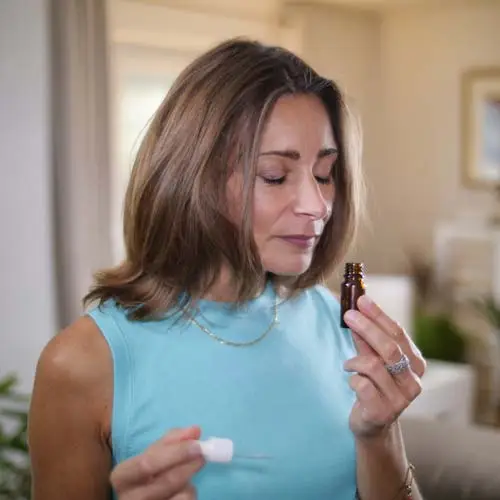
Inhaling the aromatic molecules of an essential oil or an oil blend is an effective method, particularly for decongesting the nose and cleansing the ENT passages. You can do this several times a day, using one of the following methods.
- Inhale directly from the bottle
- Use an inhaler / nasal stick
- Apply one drop on the inner wrists, hold your wrists in front of your nose and breathe deeply
⚠️ CAUTION: Not recommended for young children, pregnant women and contraindicated for people with asthma or epilepsy. Caution for breastfeeding women.
Topical Application
This is undoubtedly the most effective method. Essential oils diluted in vegetable oil can be applied to the chest, upper back or soles of the feet for rapid relief. This allows rapid systemic absorption and effective symptom relief.
Apply 3 to 5 drops of the mixture, with an equal amount of apricot kernel vegetable oil, 3 to 4 times a day.
⚠️ CAUTION: Always respect dosages and contraindications. Dont use it on:
- Pregnant or breastfeeding women
- Children
- People with asthma or epilepsy
- Individuals taking medications
Essential Oil Blends for Comprehensive Support
Creating synergies between different essential oils can increase their effectiveness. Here are a few examples, mixed in a 10 ml amber glass dropper bottle (for measuring essential oils, use a 10 ml measuring cylinder / graduated cylinder):
Adult Blend (10 ml bottle)
- 1 ml Eucalyptus Radiata (Eucalyptus radiata)
- 1 ml Tea Tree (Melaleuca alternifolia)
- 1 ml Balsam Fir (Abies balsamea)
- Fill up to 10 ml with apricot kernel oil
Apply 20 drops, 4 times daily, to chest and upper back, for 3 - 10 days.
Children over 3 years, after medical consultation (10 ml bottle)
- 0,3 ml Eucalyptus Radiata (Eucalyptus radiata) *
- 0,3 ml Thyme ct. linalool (Thymus vulgaris ct. linalool) *
- 0,3 ml Balsam Fir (Abies balsamea) *
- Fill up to 10 ml with apricot kernel oil
Apply 10 drops on the upper back, 3 times daily, for 3 - 8 days.
*) Depending on where you buy your essential oils, 0.3 ml is equivalent to 5 - 10 drops. This recipe uses no more than 1 ml of essential oils in total, mixed with 9 ml vegetable oil (apricot kernel oil). Use a graduated cylinder for measuring to ensure that you do not overdose essential oils.
Both these mixtures must be applied with care, respecting the specific instructions for preparation and application.
⚠️ IMPORTANT ALLERGY PRECAUTION
There is always a risk of allergic reaction with essential oils. It is recommended to perform an allergy test on the inside of your elbow before applying to a larger area: apply a drop of the mixture to the inside of your elbow, where the skin is thin, observe for 20 minutes. Then apply another drop and observe for 48 hours to check for any redness.
Precautions and Contraindications
Although natural in origin, essential oils are not without risks.
It is crucial to follow the recommendations for use and to take contraindications into account.
For example:
- Eucalyptus radiata is not recommended for:
- Infants under 3 months
- Women in the first trimester of pregnancy
- People with asthma or epilepsy
- Tea tree should not be used in children or during pregnancy without professional guidance.
⚠️ Self-medication is strongly discouraged in babies under 30 months. Some essential oil combinations are dangerous for infants. Always seek medical advice before use in children.
Other essential oils effective against colds
In addition to the oils mentioned previously, other essential oils may be beneficial in treating cold symptoms:
- Niaouli (Melaleuca quinquenervia) – Antiviral and antibacterial, this oil is particularly effective for respiratory infections.
- Thyme ct. linalool (Thymus vulgaris ct. linalool) – With its antiseptic properties, this oil is ideal for strengthening the immune system and fighting viral infections.
- Laurel leaf / Bay Laurel (Laurus nobilis) – An excellent anti-infective and oxygenating agent. It is also known for its analgesic properties, very useful especially if there are aches and pains related to the release of viral toxins.
⚠️ NOTE: Do not confuse thyme ct. linalool essential oil (mild and generally well tolerated) with thyme ct. thymol essential oil (dermocaustic and to be used with caution).
These oils can be used alone or in blends, respecting proper dosages and contraindications.
When in doubt, consult a qualified aromatherapist.
Why Essential Oil Quality Matters
The quality of essential oils is paramount to guarantee their effectiveness and safety. Always choose:
- Chemotyped essential oils
- 100% pure and natural
- Organic or wild-crafted
Avoid synthetic or inferior quality essential oils, which may be less effective and may pose health risks.
Best Practices for Safe Use
- Respect dosages and duration of use: It is essential to respect the recommended dosages, frequency, and duration of use to avoid side effects.
- Dilute essential oils for topical use: Some essential oils must be diluted in a carrier oil before topical application to prevent skin irritation.
- Avoid applying undiluted oils on fragile individuals: Those with sensitive skin should never apply undiluted essential oils directly to their skin.
- Perform allergy tests before first use: Before first use, perform an allergy test by applying a small amount of the synergy to the inside of your elbow, twice as explained in the IMPORTANT ALLERGY PRECAUTION above.
- Do not self-medicate without medical advice, especially for those with sensitive skin: children, pregnant and breastfeeding women, or those taking other medications.
Preventing Colds with Essential Oils
In addition to combating cold symptoms, essential oils can also be used preventively, especially during periods conducive to respiratory infections.
Regular use, for example in an aromatherapy diffuser, can help purify the air and strengthen the immune system, thus reducing the risk of catching a cold. Note that aromatherapy diffusers require certain precautions:
⚠️ Diffusion precautions:
- Not recommended for asthmatics
- Never diffuse in the presence of babies (their respiratory mucous membranes are particularly fragile)
- Do not improvise blends without proper knowledge (some essential oils are contraindicated in aromatherapy diffusers)
FAQ – Essential Oils and Colds
Which essential oils are best for colds?
Eucalyptus radiata, ravintsara, peppermint, and tea tree are among the most recommended.
Want to Learn some Simple gestures in emergency cases?
Join my course today, and discorver the practical gestures in aromatherapy thant can be integrated in daily life!
How should they be used?
They can be used sublingually with a little honey, by inhalation, or topically, respecting the dosages and precautions. Application on the skin remains a very useful, simple, and effective method because essential oils quickly penetrate the bloodstream and exert their anti-infective and immune-boosting properties systemically.
Are there contraindications?
Yes, some essential oils have contraindications, particularly for children, pregnant women, and people with certain medical conditions.
Self-medication with essential oils is not recommended for the following: pregnant and breastfeeding women, children under 7 years old, people with asthma or epilepsy, and anyone taking medication should always consult an aromatherapist to ensure that the essential oils they wish to use are compatible with their medication.
How long should they be used?
The use of essential oils for a cold can vary from a few days to a week, depending on the symptoms and individual reactions. In all cases, it is advisable to consult your doctor at the first sign of a cold, especially if it is accompanied by a fever.
Strengthening Your Resistance to Colds
Improve your resistance to winter illnesses in three simple steps:
- Purify your body to better face winter stress
- Boost your immune system to prevent infection, recover faster when you are sick, and strenghten your long-term immunity.
- Strengthen your body against respiratory and digestive viruses common in winter.
You can follow my “Winter Special” recommendations for more guidance.
Conclusion
Essential oils offer a natural and effective option for both the treatment and prevention of colds.
Their diversity allows you to choose the oil or oils best suited to each individual situation.
However, their use should be accompanied by knowledge of their properties, application methods, and necessary precautions.
When used correctly, essential oils can be valuable allies for navigating cold season with confidence and comfort.
Examples of studies and articles on the properties and the use of essential oils in respiratory or pulmonary diseases:
Shiekh RAE, et al. Therapeutic applications of eucalyptus essential oils. Inflammopharmacology. 2025 Jan;33(1):163-182. doi: 10.1007/s10787-024-01588-8. Epub 2024 Nov 5. PMID: 39499358; PMCID: PMC11799053.
Mączka W, et al. Can Eucalyptol Replace Antibiotics? Molecules. 2021 Aug 14;26(16):4933. doi: 10.3390/molecules26164933. PMID: 34443521; PMCID: PMC8398027.
Smith A, Matthews O. Aromatic ointments for the common cold: what does the science say? Drugs Context. 2022 Aug 1;11:2022-5-6. doi: 10.7573/dic.2022-5-6. PMID: 35975030; PMCID: PMC9354706.
Stinson RJ, et al. Modulation of transient receptor potential (TRP) channels by plant derived substances used in over-the-counter cough and cold remedies. Respir Res. 2023 Feb 8;24(1):45. doi: 10.1186/s12931-023-02347-z. PMID: 36755306; PMCID: PMC9907891.
Schürmann M, et al. The Therapeutic Effect of 1,8-Cineol on Pathogenic Bacteria Species Present in Chronic Rhinosinusitis. Front Microbiol. 2019 Oct 22;10:2325. doi: 10.3389/fmicb.2019.02325. PMID: 31708879; PMCID: PMC6821979.
Li J, et al. Pharmacologic effects approach of essential oils and their components on respiratory diseases. J Ethnopharmacol. 2023 Mar 25;304:115962. doi: 10.1016/j.jep.2022.115962. Epub 2022 Dec 15. PMID: 36529244.
Juergens LJ, et al. New Perspectives for Mucolytic, Anti-inflammatory and Adjunctive Therapy with 1,8-Cineole in COPD and Asthma: Review on the New Therapeutic Approach. Adv Ther. 2020 May;37(5):1737-1753. doi: 10.1007/s12325-020-01279-0. Epub 2020 Mar 21. PMID: 32200535; PMCID: PMC7467491.
Juergens UR, et al. Inhibitory activity of 1,8-cineol (eucalyptol) on cytokine production in cultured human lymphocytes and monocytes. Pulm Pharmacol Ther. 2004;17(5):281-7. doi: 10.1016/j.pupt.2004.06.002. PMID: 15477123.
Juergens UR. Anti-inflammatory properties of the monoterpene 1.8-cineole: current evidence for co-medication in inflammatory airway diseases. Drug Res (Stuttg). 2014 Dec;64(12):638-46. doi: 10.1055/s-0034-1372609. Epub 2014 May 15. PMID: 24831245
Sandner G, et al. Immunomodulatory Activities of Selected Essential Oils. Biomolecules. 2020 Aug 3;10(8):1139. doi: 10.3390/biom10081139. PMID: 32756359; PMCID: PMC7464830.
Hose L, et al., Upregulation of key factors of viral entry of corona- and influenza viruses upon TLR3-signaling in cells from the respiratory tract and clinical treatment options by 1,8-Cineol. Phytother Res. 2024 Sep;38(9):4453-4466. doi: 10.1002/ptr.8280. Epub 2024 Jul 17. PMID: 39020450.
Hawkins J, et al. Throat Spray With Blended Essential Oils Promotes Healthy Lung Function Among Women: A Randomized, Double Blinded, Placebo Controlled Clinical Trial. J Evid Based Integr Med. 2022 Jan-Dec;27:2515690X221113335. doi: 10.1177/2515690X221113335. PMID: 35849434; PMCID: PMC9297472.
Inoue T, et al. Effects of peppermint (Mentha piperita L.) extracts on experimental allergic rhinitis in rats. Biol Pharm Bull. 2001 Jan;24(1):92-5. doi: 10.1248/bpb.24.92. PMID: 11201253.
Zhao H, et al. Peppermint essential oil: its phytochemistry, biological activity, pharmacological effect and application. Biomed Pharmacother. 2022 Oct;154:113559. doi: 10.1016/j.biopha.2022.113559. Epub 2022 Aug 19. PMID: 35994817.
Elsebai MF, Albalawi MA. Essential Oils and COVID-19. Molecules. 2022 Nov 15;27(22):7893. doi: 10.3390/molecules27227893. PMID: 36431995; PMCID: PMC9696513.
Gillissen A, et al. A multi-centre, randomised, double-blind, placebo-controlled clinical trial on the efficacy and tolerability of GeloMyrtol® forte in acute bronchitis. Drug Res (Stuttg). 2013 Jan;63(1):19-27. doi: 10.1055/s-0032-1331182. Epub 2013 Jan 8. PMID: 23447044.
Dorow P, et al., Effect of a secretolytic and a combination of pinene, limonene and cineole on mucociliary clearance in patients with chronic obstructive pulmonary disease. Arzneimittelforschung. 1987 Dec;37(12):1378-81. German. PMID: 3449066.
Caimmi D, et al. Effect of the Use of Intranasal Spray of Essential Oils in Patients with Perennial Allergic Rhinitis: A Prospective Study. Int Arch Allergy Immunol. 2021;182(3):182-189. doi: 10.1159/000510592. Epub 2020 Sep 22. PMID: 32961531; PMCID: PMC7949223.
Schneider, R. (2017) A breath of fresh air: Arterial blood oxygen saturation is increased upon the use of an essential oil inhaler (Aromastick®). Results from a prospective, controlled, experimental study involving healthy individuals. Current Respiratory Medicine Reviews, 13, 213-220, doi.org/10.2174/1573398X14666180221112846.
Riechelmann H, et al., Response of human ciliated respiratory cells to a mixture of menthol, eucalyptus oil and pine needle oil. Arzneimittelforschung. 1997 Sep;47(9):1035-9. PMID: 9342418.
Willms RU, Funk P, Walther C. Local tolerability of two preparations with eucalyptus oil and pine-needle oil. MMW Fortschr Med. 2005 Oct 6;147 Suppl 3:109-12. German. PMID: 16261946.
German article: Facharztmagazine R. Cineol wirkt entzündungshemmend und antiviral. MMW Fortschr Med. 2022 Jul;164(13):64. German. doi: 10.1007/s15006-022-1288-y. PMID: 35817927.
French article: Nathalie Koziol. Huiles essentielles d’Eucalyptus globulus, d’Eucalyptus radiata et de Corymbia citriodora : qualité, efficacité et toxicité. Sciences pharmaceutiques. 2015. HAL Id: hal-01733789 https://hal.univ-lorraine.fr/hal-01733789v1
Important information
Whenever we use the term ‘essential oils’ (EO), we always refer to essential oils that are 100% natural, 100% pure, 100% unadultary, and preferably organic or wildcrafted. Only 100% genuine essential oils, obtained either by distillation or cold expression, are suitable for French aromatherapy. Proper storage and packaging, as well as adherence to the shelf life, are equally important in order to prevent the oxidation of aromatic molecules.
The information provided on this website is not intended as a substitute for professional medical advice, diagnosis, prescription or treatment. Essential oils are excellent complementary tools, but are not a replacement for medication. Aromatherapy is not recommended without medical advice for anyone in a fragile state (children, pregnant and breastfeeding women, people with allergies, asthma or epilepsy), or for anyone taking medication.
French aromatherapy requires strict compliance with contraindications, dosages and duration of use, and requires the use of essential oils of the best quality that meet standard criteria (method of cultivation, extraction, packaging, analysis and traceability). It is important to strictly adhere to the botanical and biochemical identifaction of the essential oils mentionned.
Individual tolerance to essential oils varies significantly, and it is important that each individual respects their own tolerance. For people with a low tolerance threshold, it is advisable to further dilute the essential oils listed in this recipe and the proposed synergies. Long-term use of essential oils requires medical advice.